NetHack Inspired D&D 5e Hunger Mechanics

So my regular group is in the middle of the final chapter of Waterdeep: Dragon Heist and we’re on a brief hiatus as one of our players is unavailable this month.

So I’m running two of my players through a random dungeon crawl on Roll20.

Because I needs my TTRPG fix. I needs it.

And since I became obsessed with the insanely hard rouge-like that is NetHack I was inspired to find fun ways to convert a NetHack inspired mentality into a playable D&D 5e dungeon crawl.

One thing I’ve always struggled with as a DM is a good way to track time in a dungeon. I’ve tried keeping track of turns and having players move one turn at a time. I’ve tried tracking time in terms of Travel Pace (300 ft per minute for a normal pace, 200 ft for slow pace, 400 ft for a fast pace). I’ve tried hand-waving it and simply summarizing (“Ok it takes you a minute or two to walk down the long corridor.” or “It takes you about 30 minutes to carefully search every nook and cranny of this room.”) But no matter how I try to track time it always seems unsatisfying. Now I only care about tracking time if a trap or a spell effect requires me to do so. But this is also unsatisfying to me because most of the time I want to run a gritty game that has a sense of danger and urgency.

NetHack, and many survival games since NetHack, have fixed this problem with an elegant solution. Hunger. You can’t just wander around a dungeon aimlessly because you will fucking starve to death. You need food on your person so you don’t have yet another stupid death. Every step and every action in NetHack requires you to keep in the back of your mind “I’m going to need to eat soon. It’s been a while.” I love these types of mechanics in games because everything feels more urgent when you always need to keep an eye on a continually depleting resource.

Running  D&D 5e, my players rarely ever bother mentioning they’e eating. Of course I’m partly to blame, but the system is also at fault. D&D 5e (and I believe any edition) lacks any real mechanical reasons to eat. Sure short rests and Long rests are always on players minds because that’s how they get back all their cool abilities. Outside of sleeping or just sitting for an hour nobody gives a fuck about food and water because there’s no tangible mechanical benefits for keeping track of that shit or real mechanical consequences for not eating or drinking. Sure the rules says any character needs a gallon of water and a pound of food every day but it turns into “ok just assume I’m doing that every long rest.” It ends up feeling like Skyrim where you run around punching dragons to death and your health just magically refills and you never need to eat or sleep or worry about any of the things mortal creatures need to do to just not fucking die.

Here’s what 5e has to say about Food & Water:

Characters who don’t eat or drink suffer the effects of exhaustion. Exhaustion caused by lack of food or water can’t be removed until the character eats and drinks the full required amount.

Food

A character needs one pound of food per day and can make food last longer by subsisting on half rations. Eating half a pound of food in a day counts as half a day without food.

A character can go without food for a number of days equal to 3 + his or her Constitution modifier (minimum 1). At the end of each day beyond that limit, a character automatically suffers one level of exhaustion.

A normal day of eating resets the count of days without food to zero.

Water

A character needs one gallon of water per day, or two gallons per day if the weather is hot. A character who drinks only half that much water must succeed on a DC 15 Constitution saving throw or suffer one level of exhaustion at the end of the day. A character with access to even less water automatically suffers one level of exhaustion at the end of the day.

If the character already has one or more levels of exhaustion, the character takes two levels in either case.

It’s simple rules that are easy to remember but I think they’re too simple. It ends up being forgotten and hand-waved constantly. A PC with 10 Constitution (+0 Modifier) can adventure for 3 days without eating with no problems whatsoever. What the fuck is that shit? Have you ever tried not eating for a whole 24 hours? Have you ever not eaten for 24 hours and then also carried 20lbs of coin, 30lbs of armor, a longsword, and ran around fighting goblinoids? That’s gotta fucking suck. Sure I want heroism. Sure I want a group of badasses kicking ass and chewing bubblegum. But if they’re immune to worrying about basic survival what’s the point? Where’s the drama? Where’s the suspense? Why the fuck should anyone care about a Ranger foraging food or the spell Create Food & Water? The rules presented in 5e are suitable if you want to Skyrim level worries, but I want to run a game with NetHack level worries.

So I designed Hunger Die Mechanics to sate my appetite for something more substantial.

The Hunger Die

Your Hunger Die is an indicator of how hungry you are and if you don’t eat when you’re low you will become Exhausted and eventually starve to death.

Your Hunger Die is equal to your Hit Die. It starts out at as the highest number and incrementally goes down with strenuous activity. Your Hunger Die increases when you eat, drink, or quaff a health potion. Below is a list of activities that will affect your Hunger Die. If your Hunger Die would ever go negative as the result of your actions or lack of actions you die. No Death Saves. You’re fucking dead.

After Combat                                  DC 15 Con Save

Athletics/Acrobatics                      DC 10 Con Save

Half or Less HP                              DC 15 Con Save

(Con Saves: Success=No change, Failure= -1 Hunger, Natural 1= -2 Hunger)

0 HP                                                 -2 Hunger

Short Rest                                       -1 Hunger

Long Rest                                        -2 Hunger

Eating & Drinking                         +2 Hunger

Eating/Drinking                             +1 Hunger

Eating/Drinking Poor Quality     Roll 1d6. 4-6: +1, 1-3: No Change

Eating raw corpse                         Roll 1d6. 5 or 6: +1 Hunger, 2-4: No change, 1: -1 Hunger

Eating cooked corpse                   Roll 1d6. 4-6: +1 Hunger, 2 or 3 No Change, 1: -1 Hunger

Magical Bland Food                      Roll 1d6. 4-6: +1 Hunger, 1-3: No Change

Magical Good Food                       +2 Hunger

Potion of…                                       Healing:+2, Greater:+4, Superior: +8, Supreme:+12

(If your HP Maximum is halved as a result of Exhaustion from hunger you do not make another Half HP Con Save)

Hunger Die Exhaustion Effects
D6 –          1    0    -1
Exh. Lv.  3    5    Death
D8 –           2    1    0    -1
Exh. Lv.   3    4    5    Death
D10 –         3    2    1    0    -1
Exh. Lv.   2    3    4    5    Death
D12 –        4    3    2    1    0    -1
Exh. Lv.  1    2    3    4    5    Death

With these additional mechanics I feel it maintains an heroic feel while also adding a sense of gritty realism. When you’re just exploring a dungeon and searching through ruins you still don’t need to worry about hunger. But every time you end combat, you might be a little more hungry. Every time you lose half your health you get a little hungrier. And if you go through 3 combat encounters, take a short rest, and heave open a door with brute strength, you’re probably going to need to start to worry about those dry rations sitting in your backpack. And, of course, if you ignore the consequences of your heroic actions completely, you WILL fucking starve to death. Yet another stupid death.
10 DM tips I would tell my younger self

#1

Nobody has any idea what they’re doing in the beginning.

#2

New Players won’t know or care if you’re good or bad so stop judging yourself so harshly.

#3

The Rulebooks are not infallible sacred scripture. They’re more like well thought out guidelines you can always choose to ignore.

#4

Be 100% ready to throw out your precious idea when a player freely gives you a better one.

 #5

You aren’t under any sort of obligation to play with any person. If they’re ruining your fun talk to them about it. If differences are irreconcilable then for the love of the gods walk away from any toxic relationships.

#6

Don’t save your best ideas for next session. There may not be a next session. Use everything you got every time you can and leave the table with as little regrets as possible.

#7

You can steal ideas from anything and anywhere that gives you inspiration. If your references are obscure or unknown to your players they’ll think it was your idea in the first place. If your references are obvious they may have a rewarding “Aha!” moment as their brain draws links and comparisons. If your references are obvious and they’re wang-rods about it, see tip #5.

#8

Worldbuilding may be fun but it may also be a colossal waste of time. It is a cardinal DM sin to write pages of backstory and genealogies for NPCs that the players will never interact with or care about. Every time you sit down to prep ask yourself “Will this come up in the session? Is this vital for them to know? Is there a way to tell them this naturally without a tedious info-dump?” Most of the things you think are uber important are answers to questions they never ask and artifacts that are irrelevant to the story of the PCs in the first place. Only prep what is necessary, and only time and practice can teach you what actually qualifies as necessary.

#9

LISTEN TO YOUR PLAYERS. They will give you countless pieces of information about what they find fun and what they care about in the story. Focus on the fun, feed their hearts with what they desire. And then when you have them hooked, poke them. But not too much.

#10

If your players want to do something NEVER just flatly say NO. If you must say NO because something is unreasonable in the world you are endeavoring to build you at the very least tell them WHY you are saying NO. Ideally, say “No…but you could…” and build on whatever suggested action they gave you. Eventually they will find the limits of what you find reasonable and plausible. If their view of reasonable and plausible is different than yours don’t be a wang-rod about it. Always try to find the middle ground, and sometimes (if they’re not being a wang-rod) just fucking give it to them.


Challenges

So NetHack has warped my mind in weird ways. I’m obsessed with playing it and it’s uniquely randomized AD&D dungeon delving has me pondering what I can lift from it in order to improve my own games. It’s challenged me to look at D&D in a different light. A very difficult and uncompromising light.

Taken from the NetHack wiki:

“NetHack is designed so that death is permanent (except for the amulet of life saving, of course). This adds difficulty to the game, but also adds depth. When making a mistake might cost a week of gameplay, one thinks longer about each action, and investigates more fully the possible repercussions. It also adds excitement: taking risks with a carefully cultivated character becomes more exhilarating when the stakes are higher.”

NetHack is essentially solo-DM-less D&D. Some of the items and monsters and roles (classes) are taken exactly from Advanced Dungeons and Dragons. But if there were a DM (let’s call the game itself the de facto DM), its DM would be cruel, brutal, unforgiving, and the type to make that sweet new armor horribly horribly cursed and now you’re stuck with it.

Some aspects of NetHack make no sense to try and use as a DM at the table. Like nobody needs to worry over-much about step by step movement through a dungeon (I tried this when I ran Tomb of Annihilation and it failed miserably). Or stopping to make sure every single dagger I find isn’t cursed would dramatically slow down play at the table.

But the very real possibility of permanent death? The overwhelming joy of one magic item wiping out a room of baddies you never thought you could survive? The sweet satisfaction of descending deeper than you have ever explored balanced on a razor edge against the overwhelming fear that you have no idea what’s through the darkness?

That’s some fuckin hardcore main-lined D&D go-juice right there.

It used to be, back in the day, that all one would do at the table was explore dungeons. It’s in the fucking name. It used to be that in the old Dungeon Master’s Guide Gary told DMs to create 4-6 of their own dungeons and they absolutely needed them. I mean duh, hence the name, Master of Dungeons. For years and gods known how many sessions across groups and across states everyone was just dungeon delving. Then players and DMs started asking questions. “Ok, so why should we care?” or “What’s this goblin’s story?” or perhaps even “Yea screw rescuing the blacksmith’s daughter, can we explore that wild forest you mentioned a second ago?”

So was born world-building, campaign settings, city books, continental maps, and everything else we could think of to populate a living breathing world of fantasy.

But The Dungeon never dies. The Dungeon is always there. Calling us to explore just how deep it goes and what treasures are guarded by horrific beasts. But piles of gold are absolutely worthless if death isn’t possible and viscerally real. If any fool with a wooden sword can wander down into the dragon’s hoard and a merciful DM allows them to survive, well then, what the fuck is the point?

We’ve grown so used to forgiving stories. The kind where the hero or heroine always comes out on top eventually. The day is saved. The sitcom wraps back around and the cast learns something they should have known all along. We fail the Red Quest and hit restart and go back to a previous save. But life is not like that, and personally I don’t want my Tabletop RPGs to be as cheap and predictable as the hundreds of other medias I could just watch instead. When I run D&D i want there to be a Challenge.

A challenge for my players to find a way to keep their characters alive. A challenge for me to calculate the machinations of villains and the ramifications of character actions. A challenge for the table to risk it all on the one die roll that could spell disaster or overwhelming success.

I guess what I’m trying to say is:

I want to run a Mega Dungeon. D&D on Nightmare mode. Create 3 characters because your first choice might not make it to Level 2 type of shit. A campaign heavily inspired by NetHack where random tables are the real gods, and the DM is just the messenger. Where a 1st Level Character could randomly find a Ring of Three Wishes. Where a 3rd Level Party could stumble into a Red Dragon’s Lair. Where every corridor and room is randomly determined and it’s up to the party mapper to draw out a safe way back. You WILL Die. You MAY Die heroically and save your friends. Only to pick up your next character as a lost adventurer in the next room. See how far your party can go on just 3 Character Sheets.

I dunno. I think it could be fun.

The real challenge is convincing my players to buy in.

Planning to Fail: An Alternate d20 System

Failure. We fear it. We hate when it happens to us. It drives us to do better, to be better, to learn from our mistakes. Aristotle was the first western thinker to analyze dramatic theory and defined tragedy and comedy, but core to both expressive modes of narrative is the idea of failure. In a tragedy a protagonist is brought low by the extent of their failures. In comedy we laugh as we experience the protagonist’s story as a series of errors, mishaps, and misunderstandings. Failure drives them both, what is different is a matter of tone and perspective. A character who always gets what they want and nothing bad ever happens to them is both boring and totally unrelatable to us as human beings. So why should our D&D heroes succeed ad nauseam or constantly roll 2’s all night?

I love D&D and the d20 system, but sometimes I wish there was a little more dramatic control with our narratives. Why should a rogue fail at picking a lock because they rolled a 1 and a barbarian rolls a 20 and opens up the same lock that foiled the rogue? Why should a run of bad luck on several different dice thwart the super awesome plan that the party concocted to sneak into the fortress? Wouldn’t it be nice if when a certain conflict resolution was uncertain and required a die roll that the player could decide to succeed at some cost or play it safe and fail spectacularly?

Enter the mechanical genius of Phoenix: Dawn Command. In Phoenix: Dawn Command every player has a deck of cards that they draw from in order to resolve conflicts. The cleverness of the system is that when a player draws their hand they can see how likely they are to succeed in the conflict. If a player decides that the success of this conflict is crucial, they can decide to burn their cards in order to make sure that it succeeds. They can also choose to fail on less important tasks because they want to save their good cards for when they might really need them. I love this resource management and risk/reward system. It gives the players more control over the narrative and eliminates the sometimes problematic “swingy-ness” of d20 resolution mechanics. It becomes not a matter of if random dice rolls will fail you but when will you choose to fail in the narrative.

So with this in mind I’ve come up with a way to bring this resource management risk/reward mechanic to D&D. All you need is two decks of playing cards and your players’ consent to try something new.

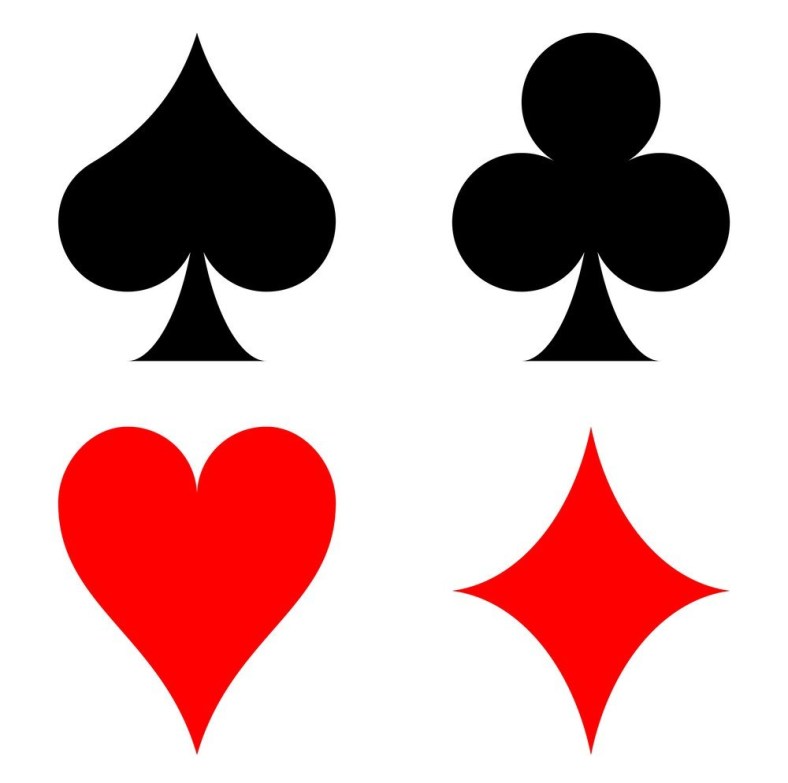
Players share a deck of cards, the DM uses their own deck. Shuffle the deck and have each player draw a hand of 4 cards. The DM draws a hand of 7 (allowing for multiple NPCs/monsters). These cards are their possible “die results” for their next conflict resolution. At the start of every turn if anyone ever has less than 4 cards they redraw from the deck back up to 4 cards.  If, for some reason, you need to make a “d20 roll” and you have no cards (using a reaction, making a saving throw, attack rolls in excess of 4, etc) you draw from the top of the deck and must use whatever result you draw. When you use cards for conflict resolutions you discard them in a pile. When the deck runs out you shuffle the discard pile and create a new deck.

The cards equal the following “d20” rolls:

  • Ace: 1 or 20 (Player can choose a Natural 20 or Natural 1. In addition to the chosen result they also get an additionally benefit. Natural 20: immediately draw one card. Natural 1: they may immediately discard any number of cards from their hand and immediately draw back up to 4 cards.)
  • 2: Natural 20
  • 3: 3
  • 4: 4
  • 5: 5
  • 6: 6
  • 7: 7
  • 8: 8
  • 9: 9
  • 10: 10
  • Jack: 15
  • Queen: 15
  • Kind: 15

What this means is that roughly 38% of the cards will allow them to almost guarantee success (Ace’s, 2’s, Jack’s, Queen’s, and King’s) 15% of the cards (the 9’s & 10’s) will allow them to succeed if they have a good enough bonus, and 46% of the cards (3’s-8’s) will almost certainly mean failure. While this system does use random draws from the deck it isn’t completely random. Players always choose their cards from their hands, but about half of the cards mean failure. The players don’t get to decide if they fail but they do get to make many more decisions about when they fail.

According to the tastes of your table the players can either openly share what their hands are or this could be kept a secret from each other. Knowing that four aces are in the collective hands could make for some interesting strategizing of attack plans. Personally, I would allow my players to know each others hands and under certain circumstances (using clever role-playing descriptions) allow them to even swap one card with one player once a round.

On the topic of Advantage and Disadvantage there are few options on how to handle those mechanics in this system.

Advantage could either a) allow a player to draw a card from the deck and choose that card or a card from their hand, or b) allow a player to add two card values together.

Disadvantage could either a) require a player to discard one card chosen at random by the DM, or b) require a player to discard two cards and use the lower value.

How you handle Advantage and Disadvantage should be chosen with everyone’s consent.

Initiative in combat can be handled by everyone drawing a card and highest goes first (players chose outcome of ties) or by rolling a d20 and adding Dexterity as usual.

Everything else about the rules of D&D 5th Edition would remain the same. You still use modifiers and still roll damage dice when you need to. But the tone and feel of combat and role-play encounters would be very different. You won’t be on the edge of your seat waiting for the d20 to stop spinning, you’ll be looking at your hand and thinking “hmm, if I want to I could guarantee this guard believes my ridiculous lie, but if I spend my Ace now I’m almost certainly going to fail the next problem that might arise. Is it worth it?”

As a disclaimer I have absolutely zero play-testing of this idea. I’m interested in trying this out with my group and also hearing if anyone tries this out. It’s just something I came up with because of my annoyance with the sometimes “swingy-ness” of d20’s and because I love the way Phoenix: Dawn Command feels very heroic and dramatic. If you haven’t heard of it or checked it out it is well worth a look.


3D NPCs. Never name them “The Blacksmith.”

Recently I’ve been devouring the contents of Waterdeep: Dragon Heist and some of its contents (NO SPOILERS) have inspired me to do a little ranting. The good kind.

Dungeon Masters love to go online and wail about rampant Murder-Hoboism in their group. There are a plethora of Youtube videos, articles, and forums discussing this “issue” at length. Usually I see that the discussions often focus around the Players and what they may or may not being doing. Categorizing problem players or bad habits. But it takes two to role-play a tango and the faults of the DM are too frequently overlooked. In my opinion it is a cardinal Dungeon Master sin to present players with 2D, boring NPCs. If you want your players to not murder everything with a pulse, you need to give them a reason to care. Make interesting NPCs and their first thought won’t be “I wonder how much gold he has and whether I can kill him before the guards find out.”

In Waterdeep: Dragon Heist the writers/designers have done their due diligence in presenting interesting, memorable, and complicated NPCs. I’ve not yet read the whole book but by only Chapter 2 I am delighted with the role-playing possibilities it will afford me and our group. I will give one such example, without too much context, to illustrate my point.

Embric and Avi. A married couple in the city of Waterdeep. Embric is a male Fire Genasi, and Avi is a male Water Genasi. Together they operate an armorer and blacksmith shop. Their descriptions are very simple and to the point. Embric is descended from the efreet of Calimshan and is prone to mood swings. Avi worships Eldath, God of Peace, is laid back, and speaks plainly. And that’s about all that the book has to say about Embric and Avi. But immediately after reading these succinct paragraphs I was overwhelmingly inspired to role-play these characters. Inspired enough to make a blogpost about it. It also reminding me of an antidote to Murder-Hoboism.

Embric and Avi are interesting. I immediately have questions about them. How did they meet? How long have they been married? What does an argument look like between the two of them and what do they agree on? What does it look like when a Fire Genasi and a Water Genasi kiss? Are they very private when in their shop or do they show public affection? Do some patrons give them a wide berth and refuse to go to them? Do they play elemental pranks on one another? Wouldn’t their shop be incredibly steamy, what with all the moisture and warmth?

The fact that I have all these questions is a great indication that 1) I will enjoy role-playing them, and 2) my players will at least remember them if not fall in love with them. These are NPCs with gravitas, and with only 252 words the module has set me up nicely to almost completely rule out the possibility of a Murder-Hobo situation. Why?

Because the inclusion of diversity and complex social situations force players to play the game in a more “realistic” way. The suspension of disbelief is so much easier when NPCs are three dimensional. The Grognard might say “oh well that’s ridiculous a Water Genasi and a Fire Genasi would never fall in love.” and to them I would say your fantasy is painfully wrong. I would also say the cliche’ “Opposites Attract” and I would also ask them if they have ever been in a real human relationship.

Humans and relationships are messy, complicated, and sometimes contradictory. We say “I’m going on a diet” and then crumble at the sight of a red velvet cake. We say “I’m not going to call her.” and then we do in a moment of weakness. We do and say things that make no logical sense, spurred on by emotional undercurrents that are years in the making and sometimes can only notice their ripples in hindsight. Human interactions are varied, include subtext, and are almost never simply what they may appear to be. Why, as a DM, would you rob your players of the rich experience of meeting an NPC they actually care about?

Let’s talk about Panda for a moment.

Panda is a Giff gunsmith savant I created for my Spelljammer campaign. He is loud, boisterous, and has zero social tact. He always says the most obvious things at the most inopportune times. My players grew to love him and he made several repeat appearances. Later in the campaign, I had established our world as having “multiple timelines” existing concurrently and they could be glimpsed in weird ways. I hinted that in an alternate timeline Panda had joined forces with the heroes to thwart a great evil, and he had solo piloted a ship rigged with smokepowder into an enemy armada. He sacrificed his life in order to save them from an unwinnable scenario. My beautiful wife, playing two characters in the campaign, immediately wept in real life. She wailed “We don’t deserve him!” and continued to cry. Somehow I had stumbled upon a character that was real in our minds and we gave a shit whether he lived or died. We care about Panda on a very real and emotional level. That’s because he’s not “The Gunsmith.” He’s Panda. He is real in our minds because he has a past, he has hopes and dreams, and he has his faults and failings.

Next time you’re tempted to use a placeholder NPC with zero personality, probe deeper and try to figure out what makes them tick. There’s plenty of techniques to flesh out characters, but here’s four quick questions that might help you:

1) What do they want badly and are having trouble getting?

2) What’s a quirk or habit specific to them?

3) What’s one thing they want everyone to know?

4) What’s one thing they want nobody to ever know?